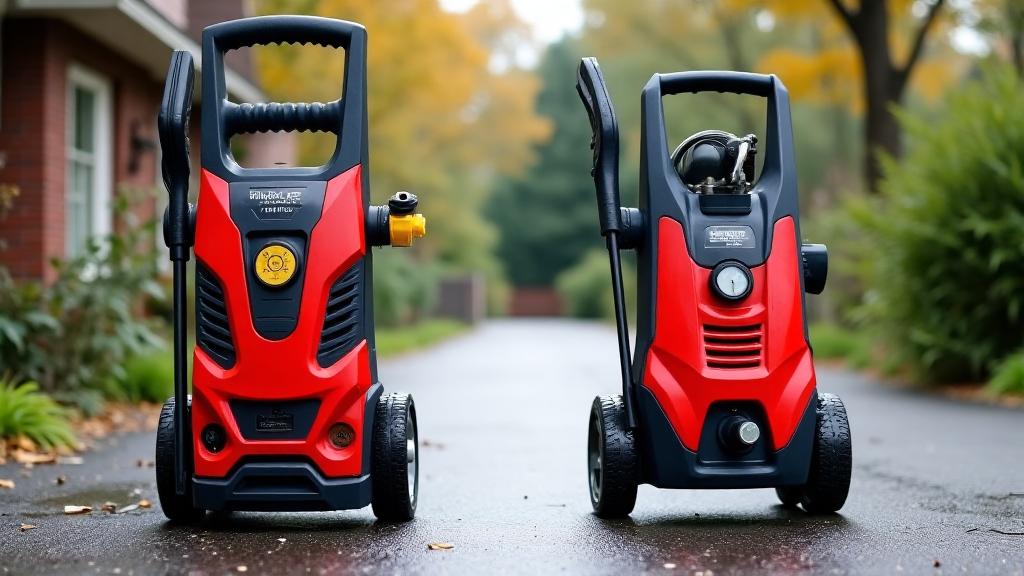
Choosing between an electric and a gas pressure washer depends on your cleaning tasks and work environment. This guide compares the key differences to help you decide.
Quick Answer
- Electric pressure washers are lighter, quieter, more affordable upfront, and require less maintenance. They are best for routine home cleaning, driveways, patio furniture, cars, within reach of an electrical outlet.
- Gas pressure washers deliver higher pressure and flow, making them suitable for heavy-duty tasks like stripping paint, cleaning large concrete areas, or working far from power sources. They cost more upfront and require regular engine maintenance.
Main Comparison
Cost
Electric models generally cost less to purchase and operate. Typical electric pressure washers range from $100 to $400, while gas models range from $300 to $600. Electric units have no fuel costs and need fewer replacement parts, keeping long-term expenses lower.
Power (PSI and GPM)
Gas pressure washers typically produce higher pressure, 2,000 to 4,200 PSI, and higher water flow, making them more effective on tough grime and large surfaces. Electric units usually deliver 1,500 to 3,100 PSI, sufficient for most home tasks. According to discussions among users, if 2,000 to 3,500 PSI meets your needs, electric models are capable.
Ease of Use
Electric pressure washers are lighter and start with a button press. Gas models are heavier and require pulling a starter cord. Users also note that electric models are much quieter and produce no fumes, making them suitable for indoor or enclosed spaces.
Maintenance
Gas engines need oil changes, spark plug checks, and fuel stabilization, increasing maintenance time and cost. Electric motors have fewer moving parts; maintenance is described as low or very low.
Mobility
Gas washers are cordless and can be taken anywhere, ideal for remote jobs. Electric washers are limited by extension cord length, though some battery-powered models (similar to cordless drills) offer limited cordless operation.
Practical Takeaways
- Choose an electric pressure washer if:
- You clean around the house, cars, patios, decks (or even your driveway, see our guide on the best pressure washer for driveways), within reach of an outlet.
- You prefer a lightweight, quiet machine with minimal maintenance.
- A pressure range of 1,500–3,100 PSI meets your needs.
- Choose a gas pressure washer if:
- You need maximum power for stubborn stains, paint removal, or large concrete areas.
- You frequently work in locations without electrical access.
- You are willing to perform regular engine upkeep.
Bottom Line
Both types get the job done, but your specific tasks and worksite determine the best fit. Electric pressure washers offer convenience and low cost for everyday use, while gas models deliver the raw power needed for demanding projects.
This article is based on desk research of published sources and does not include hands-on product testing.
References Mi-T-M, "Should I Choose an Electric or Gasoline Pressure Washer?" - https://www.mitm.com/blog/choose-electric-gasoline-pressure-washer Home Depot, "Gas vs Electric Pressure Washers" - https://www.homedepot.com/c/ab/gas-vs-electric-pressure-washers/9ba683603be9fa5395fab9013996f456 Power Equipment Forum, "Gas vs Electric pressure washer" - https://www.powerequipmentforum.com/threads/gas-vs-electric-pressure-washer.27801 Wrangler TJ Forum, "Pressure washers: gas vs electric" - https://wranglertjforum.com/threads/pressure-washers-gas-vs-electric.70795 Greenworks Tools, "Gas vs. Electric Pressure Washers" - https://www.greenworkstools.com/blogs/greenworks-blog/gas-vs-electric-pressure-washers AutoZone, "Electric vs. Gas Power Washer" - https://www.autozone.com/diy/tools/electric-vs-gas-power-washer